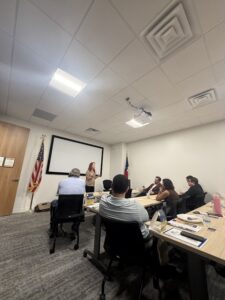
It was a pleasure attending the MetroTex Frisco Area Meeting today with my brother, Victor. This
was our first time visiting the Frisco MetroTex branch, and one of the first things we noticed was
how full the room was.
Before the presentation began, there was time for networking, and it was great getting to
connect with other real estate professionals in the area. The meeting moved efficiently after that,
and the main discussion featured Alexis Jackson, President of the Celina Chamber of Commerce.
Alexis shared a very informative overview of Celina’s growth, infrastructure challenges, business
development, and the broader changes taking place in one of the fastest-growing areas of North Texas.
For us at Appraisal Brothers LLC, this meeting was especially relevant because we regularly
complete residential appraisal assignments throughout Dallas-Fort Worth, including Celina and
the surrounding North Texas markets. When we appraise in a fast-changing area, it is important
to understand more than just closed sales. We also need to pay attention to infrastructure,
development patterns, buyer expectations, local amenities, and the conversations happening
among people who are active in the market.
That is one of the main reasons we attend meetings like this.
Celina’s Growth Was One of the Main Themes
For real estate professionals, this is important because population growth affects more than new
construction. It can influence buyer demand, school needs, traffic patterns, retail development,
land use, and how different neighborhoods compete within the same market.
From an appraisal perspective, this kind of context helps explain the story behind the data. A
sale price tells us what happened. Local market conversations can help explain why it may be happening.
PIDs, MUDs, and the Cost of Infrastructure
One of the most valuable parts of the discussion for real estate professionals was the
conversation around PIDs and MUDs.
PIDs, or Public Improvement Districts, and MUDs, or Municipal Utility Districts, are frequently
discussed in fast-growing North Texas communities. They can affect the overall cost of
homeownership, buyer expectations, and how certain neighborhoods are perceived in the
market.
During the meeting, Alexis discussed how Celina has generally moved away from approving
new MUD. PIDs, however, were described as more of a necessary tool in certain situations
because of the cost of extending infrastructure across large areas of undeveloped land.
The way it was explained at the meeting was practical: if a city grows from the center outward,
infrastructure can often be extended more efficiently. But when development occurs across
large areas of former farmland, connecting roads, water, sewer, and other infrastructure can
cost millions of dollars.
That cost has to be funded somehow.
This is where the trade-off becomes important. PIDs can add to a homeowner’s tax burden, but
they may also help fund the infrastructure and amenities that buyers have come to expect in
many newer master-planned communities.
The discussion also touched on how buyers are increasingly expecting resort-style pools, trails,
parks, golf cart-friendly areas, and other neighborhood amenities. Those features can be
attractive, but they are not free. They are part of the broader cost structure of the community.
For appraisers, it matters because market participants may react differently to neighborhoods
based on tax burden, amenities, location, access, and competing alternatives. Two homes may
be located in the same city, but the market may not view them the same way if the surrounding
cost structure and neighborhood features are different.
From Farmland to Major Retail
Another major takeaway from the meeting was how quickly Celina’s commercial landscape is
changing.
Alexis discussed the transition from a more rural setting into a market that is now seeing major
national retailers and increased commercial activity. Several names came up during the
discussion, including Walmart, and other businesses along key corridors.
The Dallas North Tollway was also a major part of the conversation. According to what was
discussed at the meeting, the tollway has played a major role in shaping Celina’s future. The
extension of the tollway was described as one of the infrastructure items that could significantly
influence future commercial and residential development.
One interesting point shared during the discussion was that Celina had reportedly been in the
running for the Universal Kids Resort project, which ultimately went to Frisco. As discussed at
the meeting, the tollway not being completed yet was cited as a factor.
Whether looking at residential or commercial real estate, that takeaway is important:
infrastructure timing matters.
Road access, utility expansion, commercial zoning, and population density can all influence
what gets built, where it gets built, and when the market starts to respond.
The Balance Between Growth and Identity
A theme that came up throughout the meeting was balance.
Growth can bring new homes, retail, restaurants, employers, and services. It can also bring
traffic, construction, higher costs, infrastructure demands, and pressure on local businesses.
That is not unique to Celina. Many North Texas cities are facing similar questions:
How do you support small businesses while attracting national tenants?
How do you add housing while managing infrastructure?
These are not just city-planning questions. They are real estate questions.
They influence how buyers view an area, how agents market properties, how lenders
understand collateral risk, and how appraisers analyze market conditions.
AI and the Future of Local Business Information
Another interesting topic Alexis discussed was the Celina Chamber’s use of AI tools to better
serve its members.
One example mentioned during the meeting was the idea of using tools like ChatGPT or Claude
to help summarize lengthy city council agenda packets into more digestible information for local
business owners.
That stood out to us because the real estate industry is already moving in that direction.
Information is everywhere, but professionals still need help organizing it, interpreting it, and
identifying what actually matters.
AI can help summarize and organize information, but it does not replace local knowledge,
professional judgment, or direct conversations with people who are active in the market.
That applies to appraisers, agents, lenders, builders, investors, and business owners.
Technology can help us process information faster. But local context is still what gives the
information meaning.
Why This Meeting Was Relevant to Us as Appraisers
For us, the relevance of this meeting was very direct.
We complete appraisals in Celina and throughout the surrounding North Texas market. When
we work in a rapidly changing area, we are not only looking at comparable sales. We are also
paying attention to the forces behind the sales.
That includes:
● Infrastructure expansion
● Tax structures such as PIDs and MUDs
● New commercial development
● Roadway access
● Buyer expectations
● Neighborhood amenities
● Local business activity
● Population growth
● Competing communities nearby
These factors may not all result in a direct adjustment in every appraisal assignment, but they
help us understand the market more clearly.
As appraisers, our job is not to repeat headlines. Our job is to analyze the market. Meetings like
this help us stay aware of what local leaders, real estate professionals, and business owners
are discussing in real time.
That awareness helps us ask better questions, research more carefully, and understand the
local market beyond what appears in a sales grid
A Full Room Says Something About the Market
Another takeaway from the meeting was the turnout itself.
The room was full, and there was discussion about the Frisco MetroTex branch potentially
expanding its meeting or conference space in the future to better accommodate the growing
attendance. That says something about the level of engagement in the local real estate
community.
People are showing up.
They are asking questions.
They are trying to understand what is happening beyond their own transactions.
We are looking forward to seeing the updated or expanded meeting space once that is
completed, and we look forward to attending more of these discussions in the future.
Toward the end of the event, we also had the opportunity to connect with someone in the
mortgage industry. We shared more about what we do as residential appraisers, and he shared
more about his work in lending. Those conversations are valuable because real estate works
best when professionals understand one another’s roles and how each part of the process connects.
Back to the Workday
After the meeting, we headed back into our normal workday. Victor went on to an appraisal
inspection in Denton, and I continued working on appraisal reports.
That is a pretty accurate picture of what our work often looks like: staying connected to the
market, attending local industry conversations, and then getting back to the detailed work of
analyzing properties, reviewing data, and completing reports.
The meeting was a good reminder that real estate is not just about numbers on a page. It is also
infrastructure, policy, growth, and local decisions that eventually show up in the market.
Introducing the Appraisal Brothers Newsletter
This is the first article in our Appraisal Brothers newsletter, and our goal is simple: to share
practical real estate insight from the perspective of a residential appraisal firm active in the Dallas-Fort Worth market.
While appraisal topics will always be part of the conversation, this newsletter is not only for
appraisers.
We want it to be useful for real estate agents, lenders, attorneys, builders, investors,
homeowners, and other professionals who want to better understand the North Texas real
estate market.
Sometimes we may discuss appraisal-related topics. Other times we may share market
observations, event takeaways, development trends, or things we are seeing in the field.
The goal is to keep the conversation practical, local, and relevant.
Final Takeaway
Our biggest takeaway from today’s MetroTex Frisco Area Meeting was that Celina’s growth is
not just about more homes being built.
It is about infrastructure.
It is about transportation.
It is about tax structure.
It is about commercial development.
It is about local business.
It is about buyer expectations.
And most importantly, it is about how all of those pieces interact in a fast-changing North Texas
market.
At Appraisal Brothers LLC, we are committed to staying in the room where these conversations
happen. The better we understand the local market, the better we can understand the properties
within it.
What is your biggest takeaway about Celina’s growth and the infrastructure changes happening across North Texas?